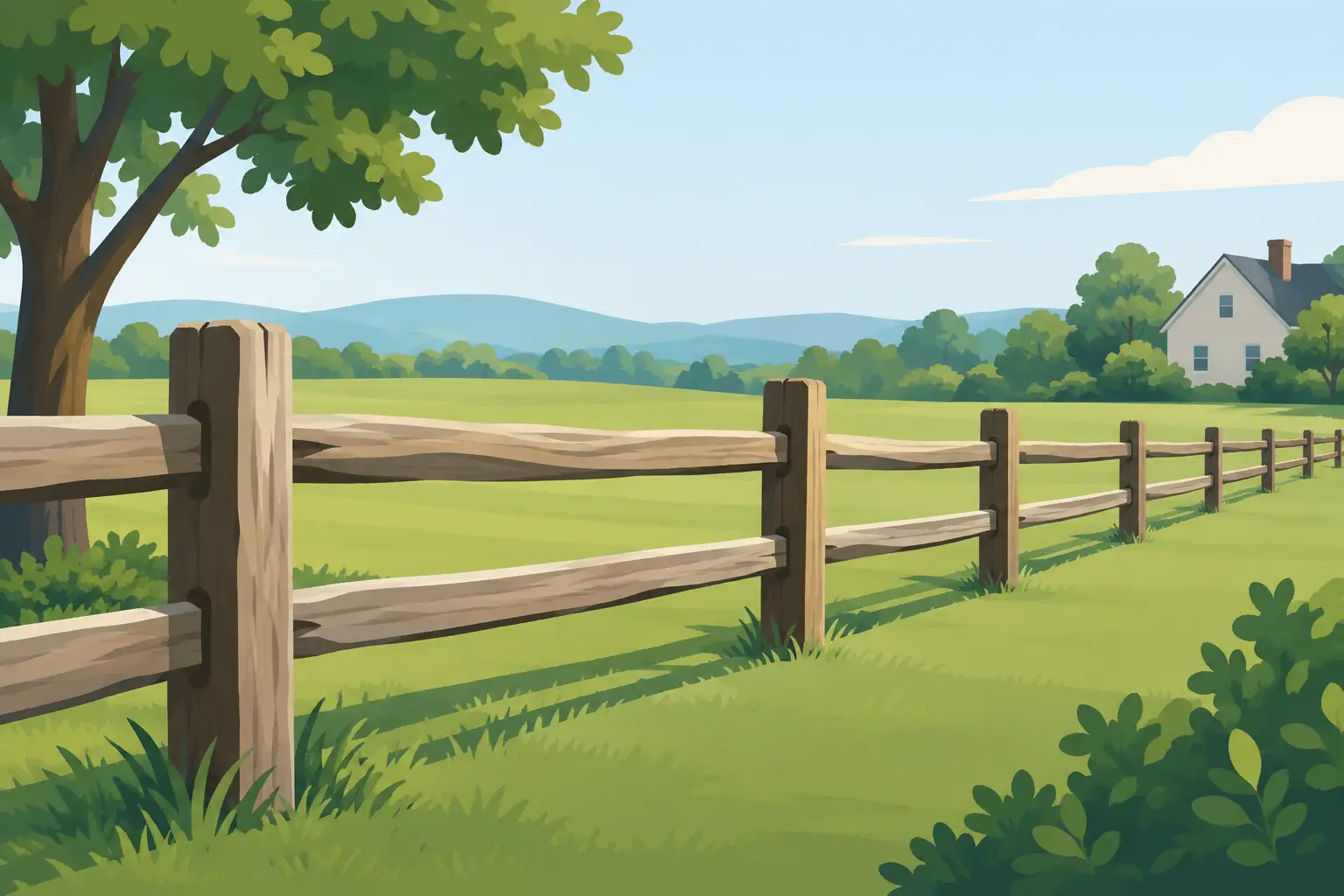
Split Rail Fence Property Boundary Basics

A split rail fence property boundary can make an open yard feel defined without making it feel closed in. For Colorado homeowners with wide lots, mountain views, livestock space, or active kids and dogs, that balance is a big reason split rail remains a favorite. It has a natural, straightforward look, but the planning behind it needs to be just as solid as the posts in the ground.
A fence can show where you use and maintain your property. It does not automatically prove where your legal property line sits. That distinction matters before anyone starts digging.
Start With the Actual Property Line
The most expensive split rail fence mistake is building a beautiful fence in the wrong place. Old fences, landscaping edges, driveway lines, and a neighbor's assumption are not reliable proof of a boundary. They may be close, but close is not always good enough when a fence, gate, or future sale is involved.
Begin with your survey, plat, or closing documents. If the corner monuments are clear and the documents match the site, you may have a good starting point. On older properties, sloped lots, acreage, or lots with unclear markers, hiring a licensed surveyor is often the sensible move. A surveyor can locate the legal corners and identify easements that affect where a fence can go.
This is especially useful in northern Colorado communities where newer subdivisions, rural parcels, irrigation features, and changing grades can make a line harder to read from the yard. Spending money on clarity before installation is far easier than moving a completed fence later.
Know the Difference Between a Boundary Fence and a Fence Near the Boundary
Some owners want the fence directly on the property line. Others intentionally set it inside their line by several inches or more. A small setback can keep posts, rails, and future repairs fully on your property, which may simplify maintenance and avoid disputes.
The right choice depends on local rules, your survey, the neighbor relationship, and whether both owners are participating in the project. If a fence will serve two properties, have the conversation before materials arrive. Talk through style, height, gates, maintenance access, and who is responsible for what. A quick, respectful discussion can protect years of good-neighbor peace.
Why Split Rail Works for Property Boundaries
Split rail fencing is built for definition rather than privacy. It marks an edge, guides traffic, frames a driveway, and gives pets or visitors a clear visual cue without blocking sunlight or views. On a larger lot, it can make the property feel cared for while keeping the landscape open.
Its open design also works well with Colorado terrain. A split rail fence can follow gentle slopes and natural contours more gracefully than many rigid fence styles. For homes near foothills, open space, or agricultural land, the look often fits the setting better than a tall solid fence.
That said, traditional split rail alone is not a containment fence for most dogs. Small dogs can pass through the openings, and larger dogs may squeeze between or jump over low rails. If the goal is a safe place for pets or children, wire mesh can be added to the inside of the rails. This keeps the classic appearance from the street while creating a more dependable barrier where it counts.
Choose the Layout Before Choosing the Lumber
The shape of the fence affects cost, function, and long-term durability. A straight run across flat ground is simple. A boundary that crosses a drainage swale, turns around mature trees, meets a driveway, or climbs a grade requires more decisions.
Walk the proposed line and look for practical issues. Where will water flow after a heavy rain or spring snowmelt? Is there enough room to mow along both sides? Will a gate need to accommodate a trailer, riding mower, or emergency access? Are there roots, retaining walls, sprinkler lines, or utility equipment in the path?
A good layout does not fight the site. It accounts for it. Posts need stable placement, rails need consistent support, and gates need level, usable ground. On steep or uneven areas, the fence may need to step down in sections or follow the slope. Each approach changes the final look, so it is worth reviewing before installation begins.
Gates Are Part of the Boundary Plan
A gate is not an afterthought. It is the point where the boundary needs to work hardest. A walk gate may be enough for taking out trash or accessing a side yard. A double gate may be the better choice for equipment, landscaping crews, trailers, or a future shed project.
Place gates where people naturally want to enter. A gate tucked into an awkward corner often gets ignored, while people create a path somewhere else. Make sure there is room for the gate to swing, that it will not drag on a slope, and that the latch is convenient for daily use.
Colorado Conditions Change How Posts Should Be Set
A split rail fence looks simple because it has fewer pieces than a privacy fence. That does not mean installation is casual. The posts carry the whole system, and Colorado soil can change dramatically from one neighborhood to the next.
Rocky ground, expansive clay, sandy soil, frost movement, and irrigation all affect post-setting methods. A contractor who works regularly across the Front Range understands that a plan that works on a level Fort Collins lot may need adjustment on a sloped property near Castle Rock or a rural parcel outside Greeley.
Post depth, spacing, drainage, and bracing should be based on the site and fence design. Corner and gate posts need special attention because they take more force than line posts. A fence that starts square and supported is less likely to lean, rack, or develop loose rails after changing seasons.
Before digging, arrange for utility lines to be marked. Never assume that a clear-looking yard is free of buried lines. Sprinkler lines, private utility runs, and other site features should also be discussed during planning so the installation crew can work carefully and avoid unnecessary surprises.
Material Choices Matter More Than Many Owners Expect
Most split rail projects use wood, but not all wood performs the same way. Cedar is valued for its natural appearance and resistance to decay. Treated pine is often a practical, budget-conscious option. The best fit depends on the look you want, your budget, exposure to weather, and how much natural variation you are comfortable seeing over time.
Wood is a living material even after it becomes a fence. It can check, fade, and weather in Colorado's strong sun, dry air, snow, and temperature swings. Those changes are part of the character of a wood fence, not always a sign of poor construction. Choosing quality materials and installing them correctly gives the fence the best chance to age well.
For a more finished boundary, some owners pair split rail with black welded-wire mesh. Others use it around a garden, dog run, pasture edge, or side yard while leaving the front of the property more open. The right combination comes down to what the boundary needs to do every day.
Check Local Rules and Easements Before You Build
Municipal rules, HOA guidelines, and utility easements can limit fence height, placement, materials, or visibility near corners and driveways. Rural areas may have different expectations than planned neighborhoods. If your property backs to open space, a trail, drainage area, or utility corridor, there may be additional requirements.
Do not rely on a neighbor's fence or a nearby home's layout as proof that your plan is allowed. Check the requirements that apply to your specific address. If an HOA approval is required, get it in writing before scheduling the work.
A professional installer can help you think through construction details, but homeowners remain responsible for confirming boundaries, approvals, and restrictions. Clear information upfront helps keep the project moving and protects everyone involved.
Build a Boundary That Fits the Way You Live
The best split rail fence property boundary is not always the one placed at the absolute edge of the lot. It is the one that respects the legal line, works with the terrain, gives your family the access and visibility you need, and holds up to daily use.
At AR Fencing, that practical approach starts with listening to how a property is used, whether that means protecting a dog's run, framing a rural driveway, creating a safer play area, or simply giving a wide-open yard a clear edge. A well-planned split rail fence should feel like it has always belonged there, while doing the quiet work of protecting the place you call home.
Comments