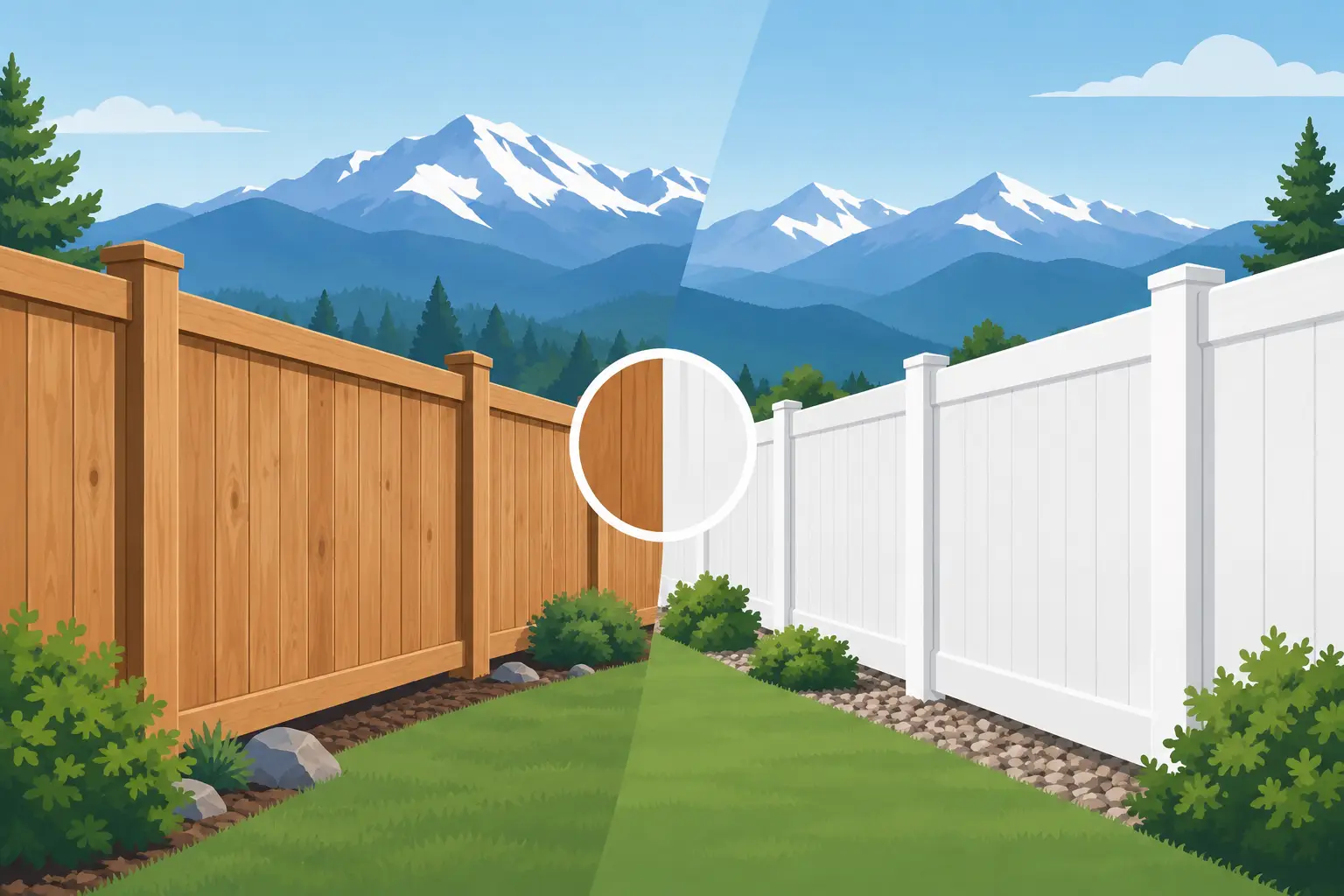
Wood Fence vs Vinyl in Colorado: What Fits?

A fence in Colorado has to do more than look good on installation day. It has to handle dry summer sun, sudden hail, heavy snow, shifting soil, and the daily pressure of kids, dogs, gates, and backyard life. When homeowners ask about a wood fence vs vinyl in Colorado, the best choice usually comes down to what matters most: natural character, low upkeep, upfront budget, privacy, or long-term predictability.
Both materials can make a yard feel safer, more private, and more finished. Neither is the right answer for every property. The better question is which fence fits the way your family uses the yard and what Colorado weather asks of it year after year.
Wood Fence vs Vinyl in Colorado: The Real Difference
Wood and vinyl create a very different look, and they also respond differently to weather, impact, repairs, and changing ground conditions.
A wood fence is a classic choice for Colorado homes. It can be built as a traditional privacy fence, a decorative picket fence, a modern horizontal design, or a custom layout that follows an uneven lot. Wood feels warm and natural, and it gives homeowners more freedom to choose the height, spacing, stain color, trim, and gate design that suits the house.
Vinyl fencing has a cleaner, more uniform appearance. It is available in privacy, ranch rail, picket, and other styles, usually in white, tan, or neutral colors. For homeowners who want a fence that does not need regular staining or painting, vinyl can be an appealing option.
The trade-off is simple. Wood offers more design flexibility and a natural look, but it needs periodic care. Vinyl reduces routine maintenance, but its style options and repair approach are less flexible.
Colorado Weather Changes the Decision
Colorado's strong sun is tough on every exterior material. Wood can dry out, fade, and develop minor surface checking over time if it is left untreated. A quality stain or sealant helps protect the boards from moisture and UV exposure while keeping the color more consistent.
Vinyl does not need staining, and it will not rot like wood. But intense UV exposure can still affect lower-grade vinyl over the years, especially if the material is thin or poorly made. Quality matters. A fence that looks similar at first can perform very differently after several seasons of sun, wind, and temperature swings.
Cold weather brings another consideration. Vinyl becomes less flexible in freezing temperatures and can be more vulnerable to cracking from a hard impact. A flying branch, a lawn mower bump, or an energetic dog hitting the fence may leave a mark that wood could better absorb. Wood can split or break too, but replacing one damaged board is often straightforward.
Along the Front Range, wind is another factor worth taking seriously. Privacy fences act like sails. Whether you choose wood or vinyl, the strength of the posts, concrete footings, rails, fasteners, and installation method matters as much as the fence panels themselves. A good-looking fence is not much help if it leans after a rough storm.
Appearance and Privacy: Where Wood Often Wins
For many homeowners, the appearance of a wood fence is hard to beat. Cedar and other wood options bring texture and warmth that fit naturally with Colorado landscapes, brick homes, newer subdivisions, and mountain-influenced architecture. Wood can be stained to complement the home, or allowed to weather into a softer, natural tone.
Wood is also the better fit when a property needs something custom. Sloped yards, odd property lines, stepped sections, framed tops, lattice accents, and custom gates are all easier to tailor with wood construction. If your goal is a modern horizontal fence or a privacy fence that does not look exactly like every other fence on the block, wood gives you room to make it your own.
Vinyl delivers a neat, consistent finish. That can be a major advantage in a neighborhood where homeowners want a crisp, polished look with little ongoing work. A solid vinyl privacy fence provides dependable screening for patios, play areas, pools, and dogs. Just keep in mind that it can look more manufactured than wood, and color choices are generally more limited.
Upfront Cost and Long-Term Maintenance
A wood fence often has a lower upfront cost than a comparable vinyl privacy fence. That makes it a practical option when a homeowner needs to enclose a larger yard, replace storm damage, or create a safe space for pets without stretching the project budget too far.
Over time, wood needs attention. Plan to inspect it regularly, especially near the bottom of posts and boards where sprinklers, snow buildup, and wet soil can create problems. Depending on the product and exposure, wood may need cleaning and a fresh stain or sealant every few years. Promptly replacing loose or damaged boards also keeps small issues from becoming larger repairs.
Vinyl usually costs more at the start, but maintenance is simple. Most of the time, a rinse with a hose and mild cleaning solution is enough to keep it looking presentable. There is no painting, staining, or concern about rot. For busy families or rental property owners who want fewer maintenance tasks, that can justify the higher initial price.
Still, low maintenance does not mean no maintenance. Vinyl posts can shift if the ground moves or drainage is poor. Gates need adjustment over time. And if a panel cracks, matching and replacing it can be more involved than swapping out a single wood board.
Repairs Matter More Than People Expect
Fence damage rarely happens on a convenient schedule. A windstorm knocks a section loose. A vehicle clips a gate. A large dog finds the weak spot. When repairability matters, wood has a real advantage.
Individual wood pickets, rails, and sections can often be repaired without rebuilding the entire run. A skilled contractor can also work with existing fencing more easily when a homeowner wants to add a gate, extend a fence line, or adjust a section around landscaping.
Vinyl repairs are possible, but they may require replacing an entire panel or working through interlocking components. Finding an exact color and profile match can also be difficult if the original fence is older or from a discontinued product line. If easy, piece-by-piece repair is high on your list, wood deserves a close look.
What About Posts and Installation?
Material is only half the decision. A fence is only as dependable as its foundation. Colorado soil can vary from one neighborhood to the next, and some lots have slopes, expansive clay, rocky areas, or drainage patterns that affect post placement.
Wood posts may be set in concrete or installed using other methods suited to the project. Vinyl systems typically use reinforced posts and sleeves designed for the manufacturer’s panels. In either case, posts need to be installed at the right depth, aligned carefully, and built to support gates and wind load.
This is where experienced local installation pays off. The crew should look beyond the fence style and consider grade changes, sprinkler lines, property boundaries, existing trees, utility locates, access for equipment, and where water moves through the yard. Those details protect the investment after the job site is cleaned up and the family is back outside.
Choosing the Right Fence for Your Yard
Choose wood if you want a natural Colorado look, more custom design options, easier board-level repairs, or a more budget-friendly starting point. It is especially well suited to homeowners who do not mind occasional upkeep in exchange for flexibility and character.
Choose vinyl if your priority is a consistent appearance with minimal routine maintenance. It can be a strong fit for level suburban yards, clean-lined homes, and families who would rather spend weekends enjoying the backyard than staining a fence.
There is also a middle ground. Some properties use wood privacy fencing where screening is needed and split rail, ornamental metal, or chain-link in less visible areas. The right solution does not have to use one material everywhere. It has to protect the parts of your property that matter most.
Before making a final choice, walk your yard at different times of day. Think about where the dog runs, where children play, where the wind hits hardest, and which views you want to keep or block. AR Fencing helps homeowners weigh those practical details, not just compare a sample board to a sample panel. A well-built fence should give your household one simple thing every day: a yard that feels secure, private, and ready to use.
Comments