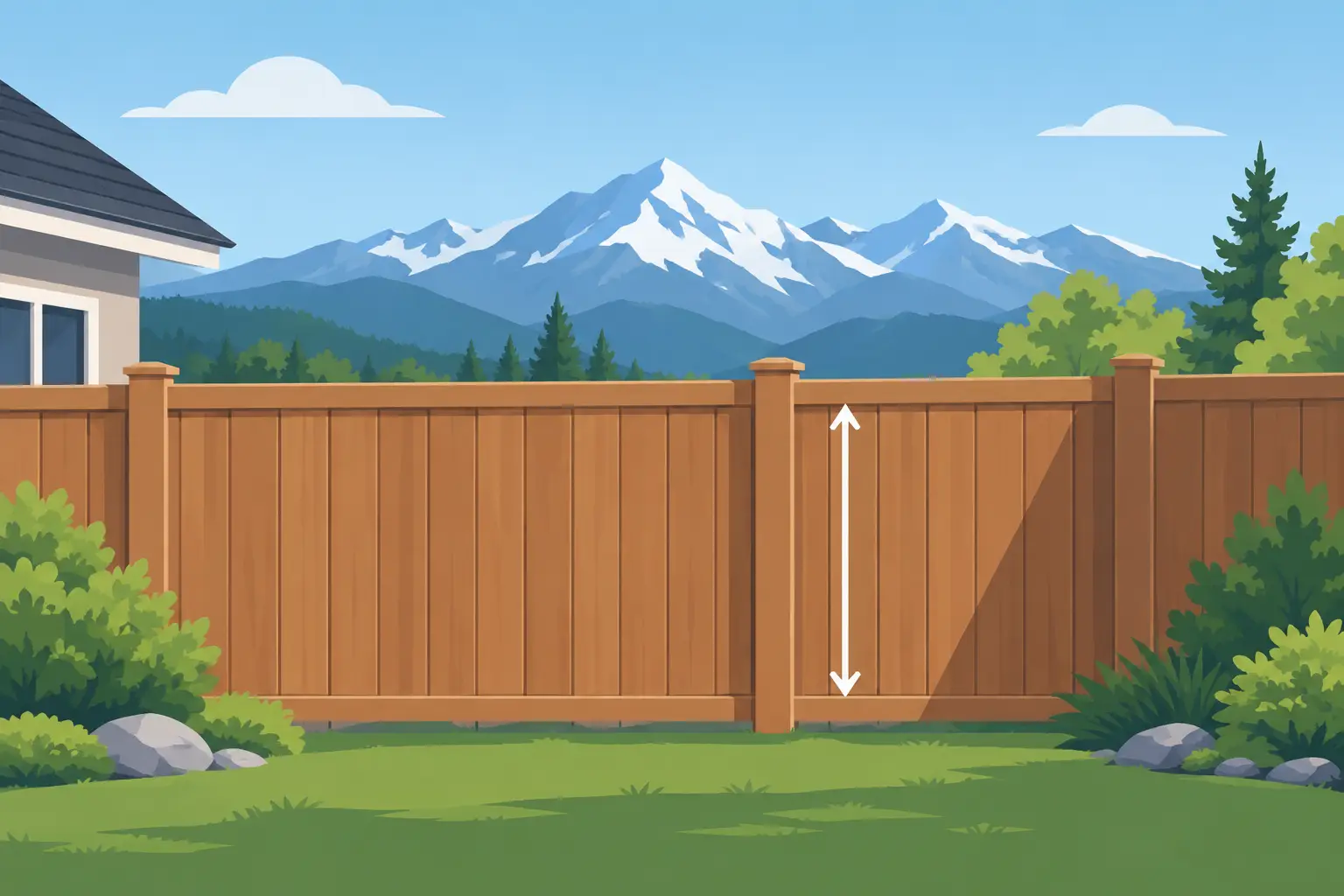
Fence Height Rules for Colorado Homeowners

A six-foot privacy fence may feel like a straightforward backyard project. Then a corner-lot visibility rule, an HOA guideline, or a pool barrier requirement changes the plan. Fence height rules are not just paperwork. They affect whether your fence provides the privacy, safety, and curb appeal you expect without creating a costly correction later.
For Colorado homeowners, the right answer often depends on the city or county, your lot layout, and where the fence sits in relation to streets, sidewalks, retaining walls, and neighboring properties. A little checking before posts go in the ground can save a lot of frustration afterward.
Why Fence Height Rules Matter
Most homeowners start with a practical goal: keep a dog safely in the yard, give kids a protected place to play, block a busy street, or create privacy between close homes. Height is central to all of those goals. It is also one of the first things local zoning rules and HOA architectural committees look at.
A fence that is too short may not contain a large dog or provide meaningful privacy. A fence that is too tall can block a driver's view at an intersection, conflict with neighborhood standards, or trigger a complaint from a neighbor. The best fence plan balances what your family needs with the rules that apply to the property.
Height requirements can also influence cost. A taller fence uses longer posts, more material, and deeper or stronger footings. In Northern Colorado and along the Front Range, wind exposure, frost movement, slope, and hard ground can all affect how a tall fence should be built. A fence that looks good on installation day still needs to stand straight through snow, wind, and changing seasons.
Common Fence Height Rules to Expect
There is no single fence height rule for all of Colorado. Municipal codes differ, unincorporated county areas may follow different standards, and private HOAs can be more restrictive than the local code. Still, many residential communities use similar starting points.
Backyard and side-yard privacy fences are often allowed up to six feet. Front-yard fences are commonly limited to a lower height, often around three or four feet, particularly near public streets. Open-style fencing may be treated differently from solid fencing because it preserves visibility. That distinction matters when comparing a low split rail or ornamental metal fence with a solid wood privacy fence.
Corner lots need extra attention. The area near the corner of two streets may have a sight-distance triangle where fence height is restricted. The purpose is simple: drivers, cyclists, and pedestrians need to see one another before entering an intersection. A tall solid fence that works perfectly along the back lot line may not be permitted near the front corner.
Do not assume a fence can be six feet everywhere just because a neighbor has one. That fence may have been built under an older rule, approved as a variance, or installed without approval. Build based on the current rules for your address, not on what happens to be standing nearby.
Measure From the Right Place
One detail causes more confusion than most homeowners expect: where fence height is measured from. It is usually measured from the finished grade on the outside or lowest side of the fence, but local definitions vary.
This becomes especially important on a sloped lot. A six-foot fence that steps down with the terrain can look much taller from the downhill neighbor's side. The same issue comes up when a fence sits on top of a retaining wall. The wall and fence may be measured separately, or their combined height may be regulated. Before choosing a design, have the grade and wall conditions reviewed against the local requirements.
Pool Barriers Have Their Own Standards
If your property has a swimming pool, the fence is more than a privacy feature. It is a safety barrier. Pool-related codes can set minimum fence heights and address gate operation, latch placement, openings near the ground, climbable features, and self-closing hardware.
A backyard privacy fence may seem like it should automatically qualify, but details matter. A gate without a reliable self-closing, self-latching setup can be a problem. So can a nearby object that makes the fence easy to climb. Pool safety requirements deserve special care because they protect children, guests, and neighbors as well as your own household.
Check More Than City Code
Local code is only one piece of the project. Before finalizing fence height and location, check the documents and site conditions that can affect the job.
HOA or metro district rules: These may limit height, color, material, style, and which parts of the lot can be enclosed. Approval may be required before work begins.
Property lines: A survey is the best way to confirm a boundary. Existing fences are not always placed on the legal line.
Utility and access easements: A fence may be allowed in an easement, but utility access can still require removal or repair later. Gates can be a smart solution where access is needed.
Setbacks and sidewalks: Lots with alleys, sidewalks, drainage areas, or unusual front-yard layouts may have added restrictions.
Shared expectations with neighbors: A brief conversation about height, style, and gate placement can prevent tension once construction starts.
For rural and agricultural properties, the question can be different. A taller fence may be needed for livestock, deer pressure, or security around equipment, but road frontage, access gates, drainage crossings, and property-line accuracy still matter. Open acreage does not mean there are no rules.
Choosing a Height That Works for Your Yard
The tallest allowed fence is not always the best fence. Start with the job the fence needs to do.
For privacy between homes, a six-foot wood, vinyl, or horizontal fence is often the practical choice. It creates a clear boundary and blocks most ground-level views without making a typical backyard feel closed in. If wind moves through your property hard, material choice and post installation matter as much as the height. A solid panel catches more wind than an open picket or rail design.
For dogs and children, think about behavior as well as height. A small dog may be safely contained by a four-foot fence, while a large, athletic dog may need six feet and a gate that cannot be nudged open. Dogs that dig may need attention at the bottom edge, not just more height at the top. For young children, reliable gate latches and a fence without loose boards or sharp edges are part of the safety plan.
For front yards, a lower ornamental metal, split rail, or open picket fence can define the property without hiding the home or creating a visibility problem. This is often a better fit where neighborhood character matters or where a solid front fence would feel too heavy.
A fence can also use more than one height. For example, a property may need a lower open fence near the street and a taller privacy fence behind the front setback. Stepped sections can follow a slope while keeping the overall design intentional. Custom planning is often the cleanest answer for lots that are anything but square and flat.
A Better Way to Plan Before Installation
Start by identifying the fence line and marking the purpose of each section: privacy, pet containment, pool safety, or a simple boundary. Then confirm the applicable city or county requirements, HOA standards, and any permit process. If the lot has a corner, a retaining wall, a visible slope, or a questionable property line, address those items before ordering materials.
It also helps to think about gates early. A gate for lawn equipment, trash access, utility access, or emergency entry can change where posts need to go. Gates are often the most-used part of a fence, so they should be sized and built for real daily use rather than squeezed into the remaining space.
When you are unsure how a rule applies to your lot, asking before construction is always cheaper than rebuilding afterward. AR Fencing helps homeowners sort through practical site questions and build fences that fit the yard, the family, and the long haul. A well-planned fence should let you enjoy your outdoor space with fewer worries, not create a new one at the property line.
Comments