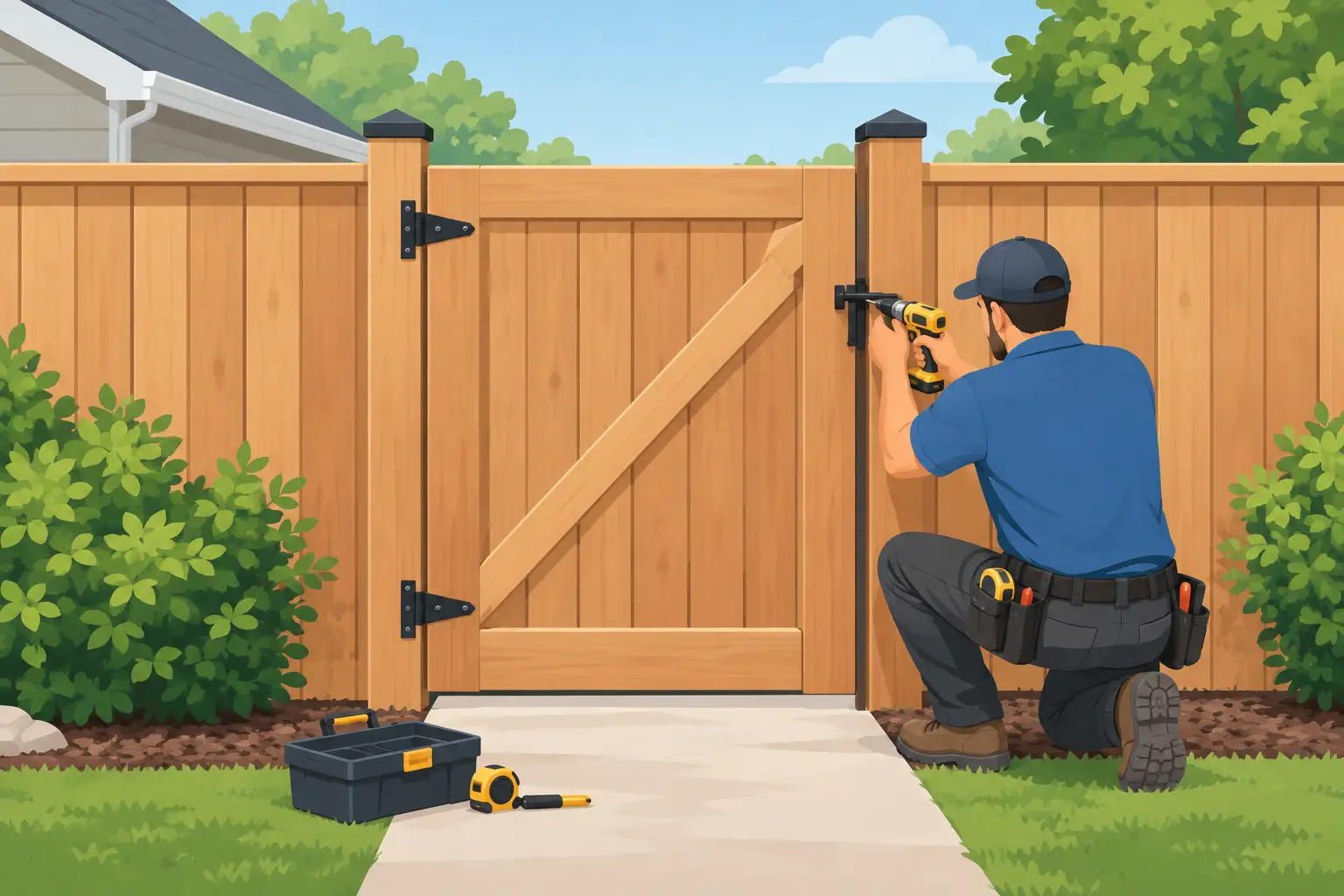
Gate Installation for Backyard Fence Done Right

A backyard gate gets used more than most homeowners expect. It is the path to the trash cans, the mower, the garden, the dog run, and the place where kids head out to play. That is why gate installation for backyard fence deserves the same careful planning as the fence itself. A gate that drags, sags, or will not latch turns a secure yard into a daily frustration fast.
A well-built gate should feel simple to use. It should swing freely, close firmly, and stay aligned through Colorado wind, snow, sun, and ground movement. Getting there takes more than attaching a few hinges to a fence panel. The post depth, gate width, hardware, slope, and material all need to work together.
Start With How Your Family Will Use the Gate
The right location is usually more important than homeowners realize. Before choosing a gate size or style, think about who needs to pass through it and what needs to fit through it. A three- or four-foot walk gate works well for people, pets, and yard tools. If you need access for a riding mower, trailer, landscaping equipment, or a utility vehicle, a double gate or a wider single gate may make more sense.
Placement matters, too. A gate near the driveway makes routine access easy, but it should not create an easy path for a child or dog to slip out unnoticed. Many families prefer a gate on the side yard, where it is convenient for maintenance but still keeps the main backyard enclosed. If the yard will be used for dogs, the latch needs to be high enough or protected enough that a smart, energetic pet cannot work it loose.
For properties in northern Colorado, site conditions deserve a close look. A gate opening at the bottom of a sloped yard may collect snow, mud, or runoff. A location close to an irrigation area can stay soft longer after watering. Moving a gate opening a few feet, or setting the finished grade properly, can prevent years of dragging and sticking.
Gate Installation for Backyard Fence Starts With Strong Posts
Posts carry the weight of the entire gate. When gate posts are undersized, set too shallow, or poorly braced, even good hinges and a well-built gate will eventually struggle. The common signs are familiar: the latch no longer lines up, the top corner drops, or the gate scrapes the ground every time it opens.
A gate post needs to be selected for the size and weight of the gate, not simply matched to the surrounding fence posts. A narrow vinyl walk gate has very different demands than a wide wood double gate. Steel-reinforced posts, heavier wood posts, or properly installed metal posts can all be good choices depending on the fence material and design.
Depth matters in Colorado. Freeze-thaw cycles and changing soil conditions can move a shallow post over time. A contractor should assess the soil, the grade, and the gate load before deciding how the posts will be set. On mountain properties, rocky ground can complicate digging. On plains properties, expansive or shifting soils can be the bigger concern. There is no one-depth-fits-all answer, but there should always be a plan built around the actual site.
Choose the Gate Style to Match the Fence
A gate should look like it belongs with the fence, but appearance is only part of the decision. Wood gates can create a warm, private look and can be built in many custom sizes. They also carry more weight than some homeowners expect, especially when built tall for privacy. Proper framing and bracing are what keep a wood gate square.
Vinyl gates offer a clean, low-maintenance appearance, but they often need internal reinforcement to prevent sagging. Chain-link gates are practical, durable, and a strong fit for pet areas, side yards, and larger openings. Ornamental metal gates can add security and curb appeal, though they require precise measurements and strong support posts. For rural or larger properties, agricultural gates may be the most practical choice for equipment access and livestock containment.
Modern horizontal fencing can also include gates that blend cleanly into the layout. This style looks sharp, but consistent board spacing and concealed or well-placed hardware take extra care. A gate that does not align with the surrounding horizontal lines can stand out for the wrong reason.
Clearance, Swing Direction, and Slope Make a Big Difference
A gate needs enough ground clearance to open without dragging, but not so much that a small dog can squeeze underneath. This balance depends on the terrain, gate type, and the pets or children using the yard. A gate opening over concrete needs a different approach than one over gravel, grass, or a changing dirt grade.
The swing direction should be decided before installation. In many backyard applications, an inward-swinging gate is preferred because it keeps the gate from opening into a sidewalk, driveway, or shared access area. Still, the inside of the yard needs enough room for the gate to swing without hitting steps, furniture, landscaping, or a parked vehicle.
Sloped yards require more planning. A standard square-bottom gate can leave a large gap at one side of a slope, while lowering it enough to close the gap may cause it to drag at the other side. Depending on the grade, the best answer may be a stepped gate, a racked gate design, adjusted grade, or a different opening location. The right solution depends on how steep the slope is and how critical pet containment is.
Hardware Is Not a Small Detail
Hinges, latches, drop rods, and self-closing mechanisms do a lot of the daily work. Cheap or undersized hardware is one of the fastest ways to shorten the life of an otherwise solid gate. Hardware should be rated for the gate weight and suited to the fence material.
For a family backyard, a dependable latch is especially important. A gate may look closed while the latch is not fully engaged, leaving enough room for a dog to push through. Self-closing hinges can be helpful near pools, side yards, or busy household areas, but they need to be installed and adjusted correctly. They are not a substitute for supervision, yet they can add a useful layer of protection.
Double gates need a way to keep one leaf secure when the other is in use. A drop rod anchored into a stable surface helps hold the inactive side in place. For a wide opening, a center stop can help the gates meet cleanly and reduce strain on the latch.
Do Not Skip Property and Access Details
Before a new gate is installed, confirm where the property line sits and whether there are easements, utility access areas, or neighborhood requirements that affect the opening. A gate built across a shared access path or too close to a utility route can create trouble later, even if the fence itself looks good.
It also helps to think ahead. If you expect to add a shed, hot tub, garden beds, or a larger patio later, will the gate still provide the access you need? A slightly wider gate today can save the cost and disruption of rebuilding a section of fence when a future project needs equipment access.
When a Repair Is Enough and When It Is Not
Not every sagging gate needs to be replaced. Tightening hardware, adjusting hinges, replacing a latch, or installing a support wheel may extend the life of a gate that is otherwise sound. But if the posts are leaning, the frame is twisted, or the material has deteriorated, a repair can become a short-term patch.
A professional assessment should be straightforward about that difference. The goal is not to replace what still has good life left. It is to avoid putting money into hardware when the real issue is a failing post or an overloaded gate design.
At AR Fencing, the focus is on building gates that serve the way a household actually lives: protecting pets, giving kids a secure place to play, and making everyday yard work easier. A properly planned gate is a small part of a fence project, but it can make the whole yard safer and more useful every single day.
Comments