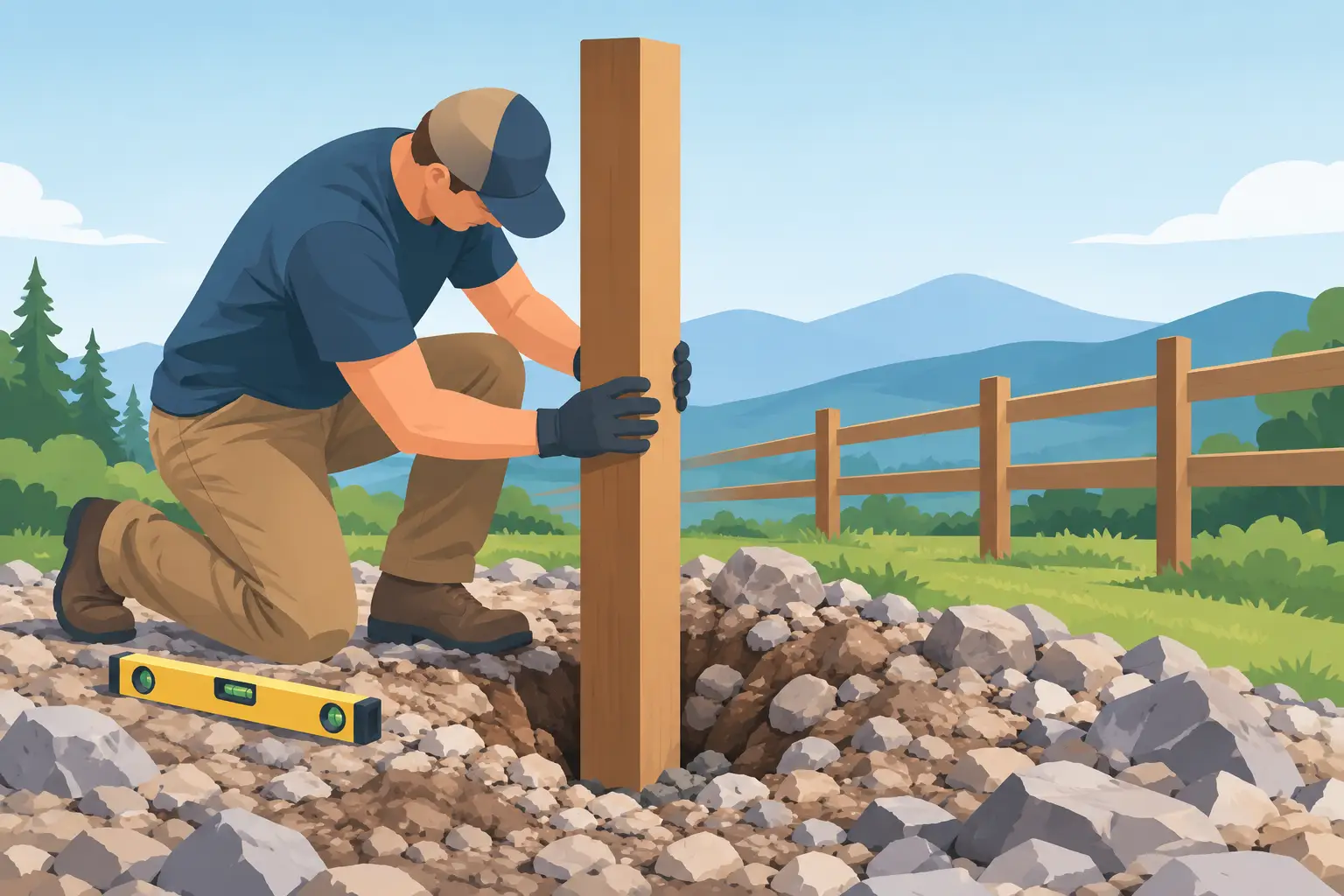
Fence Post Installation in Rocky Soil Done Right

A fence line can look straightforward until the first shovel hits buried rock. Fence post installation rocky soil is one of the biggest reasons a simple backyard project turns into a longer, more technical job. Along Colorado’s Front Range and in foothill properties, soil can change from workable dirt to packed clay, cobble, sandstone, or solid rock within a few feet.
That does not mean you cannot build a strong fence there. It means the post-setting method, equipment, layout, and fence design need to match the ground beneath it. A post that is forced into a shallow or poorly prepared hole may look fine on installation day, then lean, heave, or loosen after freeze-thaw cycles and heavy wind.
Why Rocky Ground Changes Fence Installation
Every fence depends on its posts. They carry the weight of panels, rails, gates, wind pressure, and everyday use. In easy soil, digging a properly sized and properly deep hole is usually the most predictable part of the work. Rocky ground adds several variables at once.
A buried boulder may prevent a hole from reaching the needed depth. Loose rock can leave gaps around the post if it is not removed or managed correctly. Dense bedrock can make a conventional round hole impractical without specialized equipment. On sloped lots, water can also move through rocky soil differently, washing out fines and creating movement around a post over time.
Colorado weather makes those details matter. Moisture that gets into the ground can freeze and expand. A shallow post or weak footing has less resistance when the soil moves. High winds put added force on a privacy fence, especially where a long solid fence catches wind like a sail.
The goal is not simply to get posts into the ground. The goal is to create a fence line that stays plumb, secure, and safe for kids, pets, and daily backyard use.
Start With the Ground, Not the Fence Style
Before selecting materials or setting a single post, look closely at the property. Rocky soil is not all the same. A yard with scattered fist-sized rocks may need extra digging time but can still accept standard post holes. A site with large buried fieldstone or hard shale may require a different approach altogether.
The slope matters too. A fence running across a steep grade needs careful planning for post placement, panel transitions, and the space under the fence. If the yard is meant to contain a dog, even a small gap caused by uneven terrain can become a problem.
It also helps to identify areas that have been backfilled after construction, drainage work, or landscaping. Fill soil can hide debris, compact differently, and settle after a fence is installed. Existing retaining walls, sprinkler lines, utility routes, and mature tree roots should all be considered before excavation begins.
Calling for utility locates is a necessary first step, but it does not show every private line on a property. Homeowners should point out sprinkler systems, low-voltage lighting, invisible pet fencing, drainage pipes, and any known buried features before work starts.
The Right Post Hole Depends on What Is Below
In standard conditions, a fence post is typically set deep enough to resist movement and support the fence above it. The exact depth depends on post height, soil conditions, fence type, local exposure, and whether the post will support a gate. Gate posts, for example, take far more strain than a line post and often need a larger, deeper footing.
With rocky ground, the crew may need to widen the hole, remove loose stone, or use mechanical tools to break through compact material. When bedrock is close to the surface, the best solution may be to drill into the rock, use an engineered mounting approach, or revise the fence alignment slightly to avoid an obstruction. The right answer depends on the site, not a one-size-fits-all rule.
Trying to place a post on top of a rock and cover it with a little concrete is rarely a lasting fix. The post needs dependable support below grade. If it cannot reach an appropriate depth, the installation plan should change before the fence is built.
Concrete Is Helpful, but It Is Not a Shortcut
Concrete can provide a stable footing when used with the right hole preparation and drainage considerations. It is not a cure for a shallow hole, a post set against loose rock, or a hole that fills with water. In some conditions, poorly placed concrete can actually trap moisture near the post or create a rigid mass that shifts with the surrounding ground.
A good installation accounts for the bottom of the hole, the condition of the sidewalls, the post material, and the local soil. The concrete should support the post without leaving standing water where it does not belong. The post must also be held plumb while the footing sets, because correcting a crooked line after rails and panels are attached is much harder.
Choose Fence Materials With Terrain in Mind
Rocky soil does not automatically limit you to one type of fence. Wood privacy fencing, horizontal fencing, split rail, chain-link, ornamental metal, vinyl, and agricultural fencing can all work on difficult ground. The best choice comes down to what the fence needs to do.
A wood privacy fence provides strong backyard screening and a defined space for family life, but solid panels catch more wind than an open-style fence. That makes sound post installation especially important. Modern horizontal fencing has a clean look but needs careful alignment because uneven post spacing or slight movement is more noticeable across long, straight lines.
Chain-link fencing can be a practical choice for pet containment on irregular terrain because it can follow some changes in grade more easily. Split rail and agricultural fencing may suit larger rural properties, though wire attachments and livestock needs add their own spacing and tension requirements. Ornamental metal and vinyl systems often rely on precise post placement, so rocky ground can affect labor and planning even when the finished look is simple.
For a sloped yard, the fence may be stepped in sections or racked to follow the grade. Stepping creates level sections with visible transitions. Racking follows the slope more closely. Each option changes the look, the clearance at the bottom, and the way posts carry the load.
Plan Gates Before Digging the Line Posts
Gates deserve extra attention on rocky sites. A gate that drags, sags, or will not latch is frustrating from day one, and the problem usually starts at the posts. Gate posts need to handle the gate’s weight plus repeated opening, closing, wind, and people leaning on them.
The gate location should be chosen with the approach in mind. Is there enough room for the gate to swing without hitting a slope, landscaping, a vehicle, or a retaining wall? Will the ground remain clear during snow, mud, and seasonal movement? On a rocky property, moving a gate opening a few feet can sometimes avoid the hardest digging and lead to a better long-term result.
Double gates and driveway gates require even more care. Their posts must remain aligned for both sides to meet correctly. A small amount of movement that might go unnoticed in a line fence can make a wide gate difficult to use.
What Homeowners Can Expect During Rocky Soil Work
Rocky ground often adds time because it requires more than routine auger work. Crews may need to hand-dig around obstructions, use demolition tools, remove excavated rock, or reset the layout around conditions found below the surface. That is not wasted effort. It is the work that protects the rest of the fence.
A straightforward contractor should explain when site conditions affect the plan or price. Homeowners deserve to know whether the issue is loose rock, large boulders, shallow bedrock, unexpected concrete, or an underground feature that was not visible beforehand. Clear communication prevents surprises and helps everyone make a practical decision before the project moves forward.
It is also reasonable to ask how the crew will protect landscaping, clean up excavated material, and keep the yard safe while work is underway. For families with dogs or young children, a temporary plan for access and containment can make fence installation far less disruptive.
Fence Post Installation in Rocky Soil Is Worth Doing Carefully
There is a temptation to rush difficult holes because most of the finished work will be hidden below ground. But hidden work is exactly what determines whether the fence stays straight through wind, snow, rain, and years of opening the gate.
At AR Fencing, the work starts with understanding the yard, not forcing a standard method onto every property. A well-built fence should give your family a secure place to play, relax, and let the dog outside without worrying about a weak post or shifting gate.
If your property has rock, slope, or hard ground, bring that up during the estimate. A careful site review and an honest plan at the beginning are the best way to build a fence that feels solid long after the installation crew has cleaned up the yard.
Comments