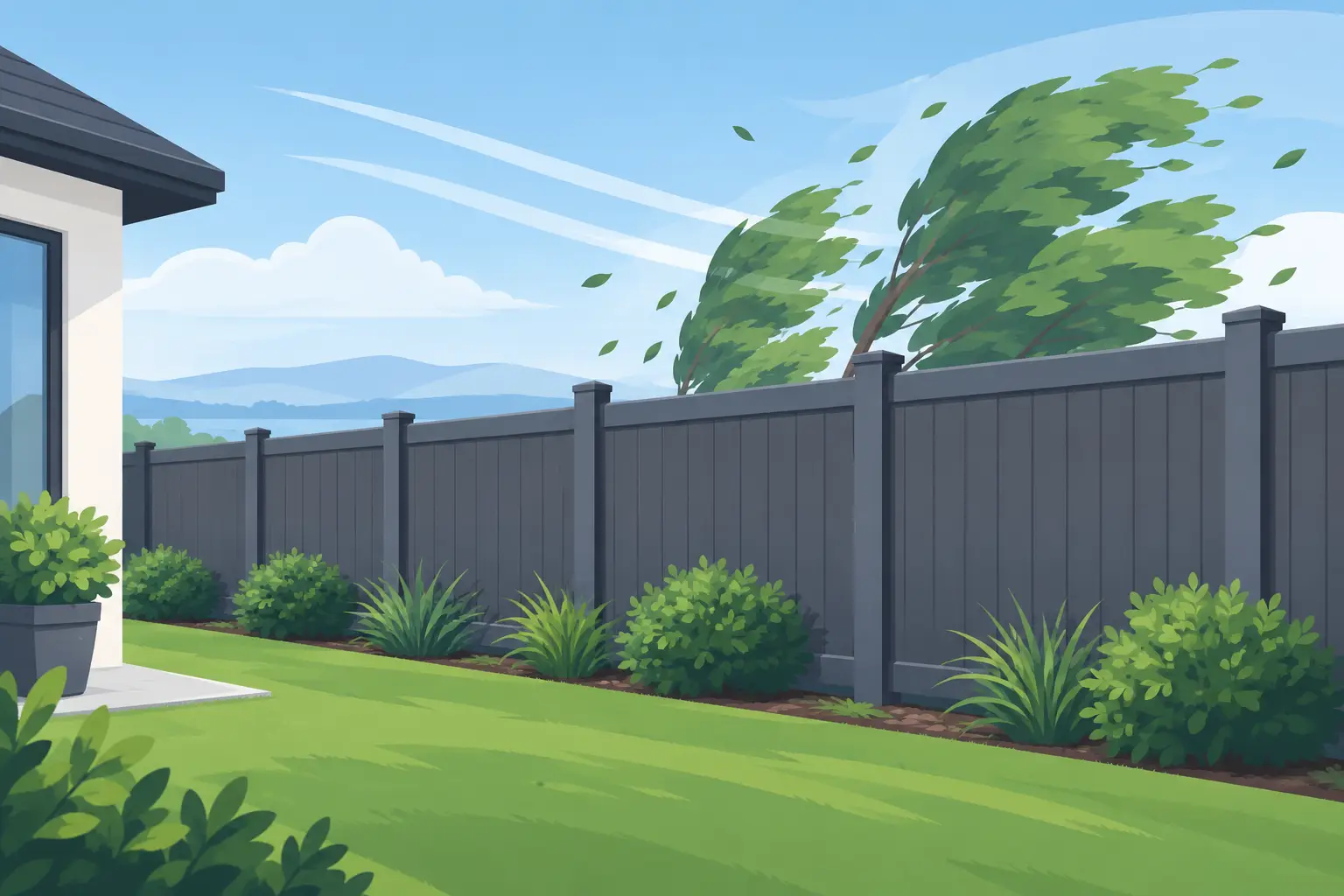
Choosing a Privacy Fence for Windy Areas

A tall solid fence can turn a hard Colorado gust into a serious force on your property. That is why choosing a privacy fence for windy areas is about much more than picking the material or stain color. The posts, footing depth, panel design, gate framing, and condition of the soil all need to work together.
For a family that wants a private place for kids to play or dogs to roam, a fence still needs to feel enclosed. But when wind is part of the picture, building the tallest, most solid wall possible is not always the smartest answer. A fence built for the conditions can protect your yard, look right at home, and stand up better season after season.
Why Wind Changes Fence Design
Wind does not hit every fence the same way. A short, open rail fence lets much of the air pass through. A 6-foot privacy fence catches it. When a solid fence blocks wind, the pressure transfers through the rails and fasteners into the posts, then into the concrete and soil below.
In northern Colorado and along the Front Range, wind can arrive fast and from different directions. Open lots, new developments without mature trees, properties near fields, and homes on exposed slopes tend to take more of it. A fence that has lasted for years in a sheltered backyard may not be the right model for a wide-open property in Windsor, Greeley, or east of Fort Collins.
The result of underbuilding is usually easy to spot: leaning posts, loose panels, cracked concrete around a post, sagging gates, or an entire fence line that starts to rack sideways. The good news is that most of these problems can be prevented at the planning stage.
The Best Privacy Fence for Windy Areas Balances Airflow and Privacy
A full solid-board wood fence can be a good choice in a windy yard, but it needs the right support system. It is often the best fit when true visual privacy is the priority. The trade-off is simple: more solid surface means more wind load.
For especially exposed properties, a semi-private design deserves consideration. Styles with narrow spacing between boards, decorative top sections, or alternating-board construction can relieve some pressure while still making the yard feel private from normal viewing angles. The amount of airflow matters, but so does the direction of the prevailing wind and where the fence sits in relation to the house, garage, and trees.
A horizontal fence can also work well, especially for homeowners looking for a clean, modern look. However, long horizontal boards need secure rail support and careful fastening. If the boards loosen over time, wind can work them back and forth until the fence loses its clean lines.
Vinyl privacy fencing provides a uniform appearance and does not need staining, but it should not be chosen just because it appears low-maintenance. Vinyl panels in a windy location require a system designed for the load, with compatible reinforced posts and proper installation. A bargain-grade panel system may be less forgiving when strong gusts hit a broad, open fence run.
If privacy is not needed around the entire property, consider using a solid fence only where it matters most - around a patio, hot tub, play area, or close neighbor-facing side yard. More open fencing elsewhere can reduce cost and wind pressure without giving up the comfort you want where you spend time outdoors.
Strong Posts Matter More Than Heavy Panels
The strongest-looking panel is only as dependable as the post holding it upright. Posts carry the real load, and they deserve more attention than homeowners often give them when comparing fence estimates.
For a typical residential privacy fence, post size, post spacing, depth, concrete placement, and the soil at the site all affect how the finished fence performs. In windy locations, closer post spacing may be a worthwhile upgrade because it shortens the unsupported span between posts. That reduces flex in the rails and gives each section less surface area to fight the wind.
Depth is just as important. A shallow post may look fine when the work is new, then begin moving after repeated storms, winter freeze-thaw cycles, or wet soil conditions. Colorado properties can vary dramatically from one neighborhood to the next. Some have compact ground, others have sandy areas, expansive clay, rocky soil, or grades that shed water toward the fence line. There is no one-size-fits-all hole depth that works perfectly for every yard.
Quality concrete work helps anchor posts, but concrete alone cannot make up for poor layout or undersized materials. A professional installer should assess the fence height, exposure, grade, soil, and gate locations before deciding how the structure needs to be built.
Do Not Treat Gates Like Ordinary Panels
Gates get used, pulled, slammed, and leaned on. In a windy yard, they also act like sails when left open. That makes their posts some of the most important posts on the project.
A wide driveway gate or double gate needs a stronger plan than a standard walk gate. Proper framing, hinges, latches, clearances, and reinforced gate posts all help prevent a gate from sagging or dragging. If a gate will face the usual wind direction, a latch that holds firmly and a stop that prevents overextension can save a lot of frustration.
Materials That Hold Up When Weather Is Part of the Job
Wood remains a practical, attractive choice for Colorado privacy fencing. It can be repaired board by board, adjusted to uneven terrain, and built in styles that suit both traditional and modern homes. For wind resistance, the key is not simply choosing thicker boards. It is using sound posts, properly secured rails, quality fasteners, and a layout appropriate for the site.
Steel-post fence systems are worth discussing for exposed locations. A steel post can add strength while allowing the finished fence to keep the warmth and appearance of wood. This option may cost more up front, but it can make sense for a long fence line with little wind protection.
Vinyl is a reasonable choice when homeowners prefer a consistent, low-upkeep finish, while ornamental metal or chain-link may suit areas where containment and visibility matter more than privacy. Rural and larger properties may use a combination: privacy fencing around the backyard, then agricultural, split rail, or chain-link fencing farther out. That approach can keep the family space private without putting an unnecessary solid wall around every acre.
Details That Prevent Early Fence Failure
Small construction details often separate a fence that looks good on installation day from one that stays straight through changing weather. Fasteners should be chosen for outdoor use and installed cleanly so boards and rails stay secure. Rails need enough support to resist movement, and boards should have room to expand and contract with seasonal moisture changes.
Drainage also deserves attention. Water repeatedly pooling around post bases can weaken the surrounding soil and make movement more likely. On a sloped yard, the fence may need stepped sections, racking, or thoughtful grading so it follows the terrain without leaving large gaps beneath it.
Trees can help break wind, but they also create their own risks. A fence line directly beneath large limbs may be exposed to falling branches, while roots can complicate post placement. It is better to plan around those conditions than force a straight layout that creates trouble later.
Before building, confirm property lines and any neighborhood requirements for height, materials, and placement. A wind-ready fence needs to be structurally sound, but it also needs to be in the right place. Moving a newly built fence because of a boundary issue is an expensive mistake.
When Repair Is Enough and When Replacement Makes More Sense
A few loose boards or a damaged rail after a storm do not always mean the whole fence needs replacing. Targeted repair can be a smart, cost-conscious solution when the posts remain plumb and the rest of the fence is in good shape.
Replacement is often the better route when several posts lean, panels have repeatedly come loose, or the fence line has widespread rot and movement. Replacing one failed section beside an aging, unstable run can leave you with a patchwork solution that does not solve the real problem. An honest assessment should focus on the structure below the boards, not just the visible damage.
For exposed Colorado yards, AR Fencing approaches wind as a construction issue, not an afterthought. The right answer may be a solid wood privacy fence with stronger posts, a semi-private design that eases wind pressure, or a mixed-material layout that fits how your family actually uses the property.
A good fence should make the backyard feel calmer, not give you something new to worry about every time the forecast calls for high winds. Build for the yard you have, the privacy you need, and the weather that is bound to come back.
Comments