Child Safe Backyard Fence Basics for Families

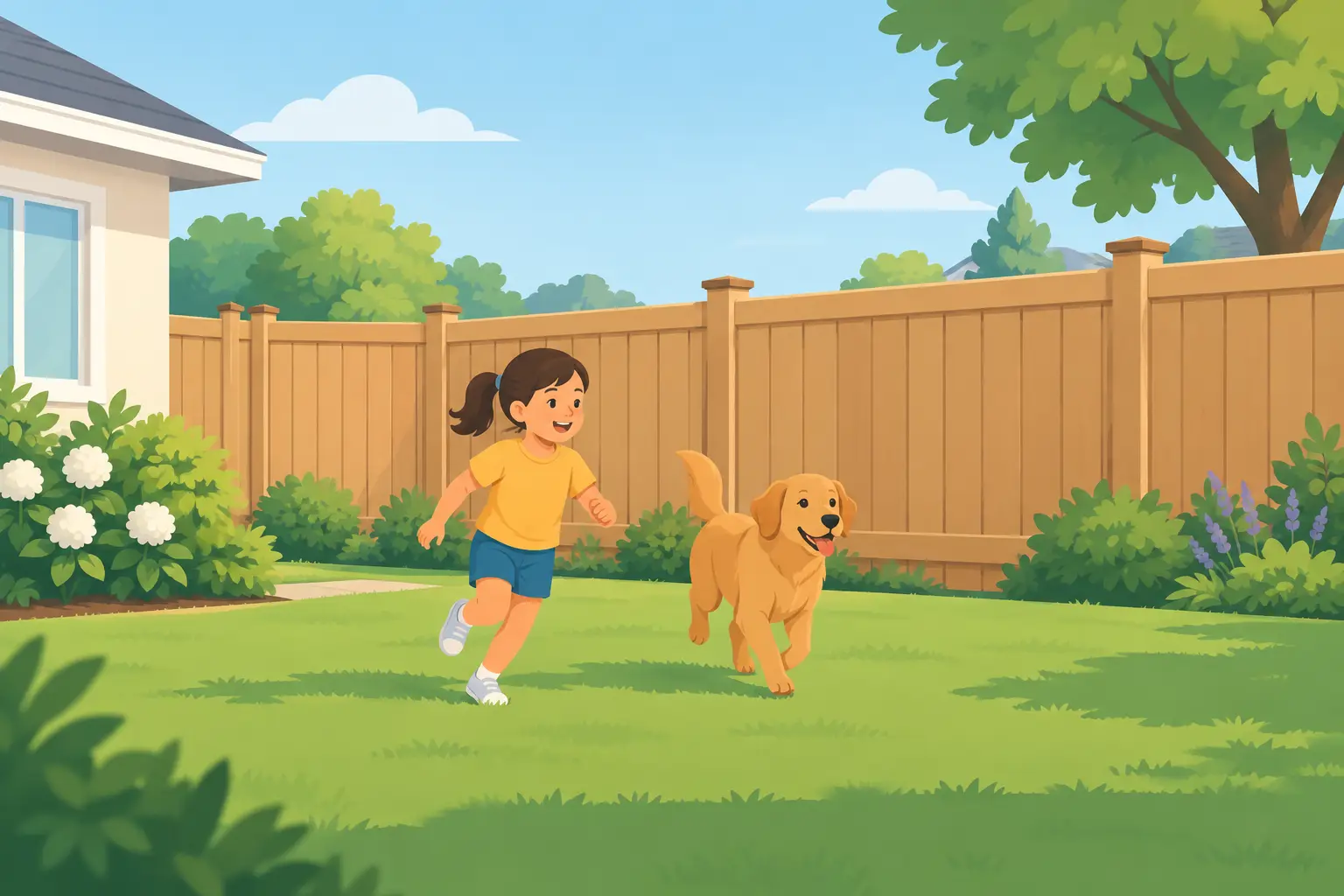
A backyard changes when children are old enough to run, climb, chase a ball, and test every boundary. A child safe backyard fence gives parents a defined place for play, helps prevent unsupervised trips toward the street or driveway, and makes everyday time outside feel less stressful. The right fence is not simply the tallest one available. It is a complete system of sturdy panels, secure posts, well-built gates, and thoughtful yard planning.
Start With the Risks in Your Own Yard
Every property has different pressure points. For one family, the concern may be a busy road behind the home. For another, it is an alley, an open side yard, a neighboring dog, a pond, a slope, or a gate that leads straight to a driveway. Walk the perimeter at a child's eye level before choosing a fence style.
Look for places where a child could squeeze through, crawl under, climb over, or open a gate. Also consider what is just outside the fence line. A fence that contains a toddler well may still need a solid privacy section if it backs up to traffic, an active sidewalk, or a neighbor's pool area.
The goal is not to replace adult supervision. It is to create a dependable boundary that gives you an extra layer of protection while kids play, pets roam, and life happens inside the house.
Choose a Height That Fits the Job
For most family backyards, a 6-foot fence provides a strong balance of containment, privacy, and security. It is high enough to discourage climbing and helps block the visual distractions that can draw a child toward a neighboring yard or street.
A shorter fence can work in a calm, enclosed setting, especially when visibility is more important than privacy. Four-foot ornamental metal or chain-link fencing, for example, may define a play area without making a smaller yard feel closed in. The trade-off is that shorter fencing is easier for an adventurous child to climb and offers less separation from outside activity.
Local rules, HOA requirements, and property layout can affect allowable height, particularly near front yards, corners, easements, and driveways. A contractor familiar with Northern Colorado and Front Range neighborhoods can help identify those constraints before materials are ordered and posts are set.
Avoid Climbable Designs Where It Counts
Horizontal rails can become footholds when they face the inside of the yard. If a wood privacy fence is the best choice, placing the rails on the exterior side can make the inside surface more difficult to climb. This is not always possible or preferred, especially where both neighbors share the appearance of the fence, but it is worth discussing.
Wide lattice, decorative cutouts, and closely spaced horizontal boards can also invite climbing. A modern horizontal fence may be a great fit for privacy and curb appeal, but spacing and layout matter when young children are part of the household. The safest design depends on the child's age, habits, and the risks beyond the property line.
A Secure Gate Matters as Much as the Fence
A well-built fence can be defeated by one loose or easy-to-open gate. Gates should latch reliably every time, swing freely without dragging, and remain square through changing weather and regular use. In Colorado, frost movement, wind, and dry conditions can all expose weak installation over time.
For a child safe backyard fence, place latches high enough that a young child cannot easily reach them. A self-closing hinge can add another level of protection, especially on a gate used frequently for trash bins, lawn care, or access to a side yard. If the gate opens toward a driveway, street, or other hazard, a self-latching, self-closing setup is often a smart investment.
Do not overlook double gates. They are useful for equipment access, but they need a dependable center connection and ground hardware so one side cannot drift open. The same applies to gate repairs. Sagging, sticking, or loose hardware is more than an annoyance when the gate is part of your family's safety boundary.
Keep Openings Small and the Bottom Secure
A safe fence line should not have large gaps between pickets, beneath panels, or around gates. Children are naturally curious, and even small openings can become a problem if they lead toward a neighboring yard, road, or animal enclosure.
Ground clearance deserves special attention on sloped lots. A fence installed in a straight line across uneven ground may leave triangular gaps at the bottom. Stepping the fence to follow grade, contouring the panels, or adding a properly planned bottom barrier can close those openings without creating an awkward-looking result.
Do not rely on loose rocks, boards, or temporary garden edging to block a gap. Those fixes shift, rot, or create tripping hazards. The better approach is to address the grade and fence layout during installation, then inspect the perimeter after the first season of weather.
Pick Materials for Safety and Real-World Maintenance
There is no single best material for every family. The right choice depends on privacy needs, budget, neighborhood style, maintenance expectations, and how exposed the yard is to wind and sun.
Wood privacy fencing remains a practical choice for many Colorado homes because it creates a solid visual barrier and can be customized around slopes, gates, and landscaping. Quality post setting, thoughtful framing, and consistent picket spacing matter far more than a quick, thin-panel installation. Wood does require periodic care, and the look will naturally change as it weathers.
Vinyl fencing offers a clean appearance and low routine maintenance. It can be an excellent option where families want privacy without staining or painting. However, vinyl must be installed with the right reinforcement and layout for local wind conditions. A bargain installation that flexes or shifts is not a good value.
Ornamental metal fencing provides strong visibility and a polished look. It works well around patios, gardens, and play areas where parents want to keep sightlines open. It does not provide privacy, and the spacing between pickets should be considered carefully for younger children.
Chain-link is durable, affordable, and useful for larger yards, pets, and practical containment. Black vinyl-coated chain-link can feel less industrial than traditional galvanized fencing. For a child-focused space, check that the fabric is tight, the framework is secure, and exposed edges or damaged sections are repaired promptly.
Split rail and agricultural styles can suit rural properties, but they are generally not enough by themselves for a small child or pet. They may work as a boundary marker alongside a separate enclosed play yard.
Build the Play Area With the Fence in Mind
The fence is only one part of a safe backyard. Keep climbable objects away from it, including storage boxes, picnic tables, playhouses, wood piles, and large planters. A child who cannot reach the top rail from the ground may be able to reach it from a toy chest placed against the fence.
Pay attention to gates near pools, hot tubs, ponds, retaining walls, and driveways. These features may require their own barriers or safety measures beyond a standard backyard fence. Pool barriers in particular have specific code requirements that should be addressed separately from a general privacy fence.
Landscaping can help, too. Thorny or dense plantings may discourage access along a side yard, but they should not obstruct your view of a gate or create a hidden area where children can play unnoticed. Keep the area around latches clear, visible, and easy for adults to reach.
Installation Quality Is a Safety Issue
A fence is only as dependable as its posts, footings, hardware, and construction. Panels that look straight on installation day can lean when posts are too shallow, poorly set, or not suited to the soil. Gates can sag when their posts are not built to carry the extra load.
Colorado properties can present very different challenges within a short drive. Clay soils, rocky ground, changing grades, heavy wind exposure, and freeze-thaw cycles all affect how a fence should be planned and installed. This is where experienced, hands-on construction matters. A contractor should look at the site, explain the approach in plain language, and build a fence that fits the conditions rather than forcing a one-size-fits-all design.
After installation, make a habit of checking the latch, hinges, fence line, and bottom clearance every few months. Catching a loose screw, a settling gate, or a new gap early is simpler than waiting until it becomes a bigger repair.
A good backyard fence gives children room to be loud, imaginative, and active while giving parents more peace of mind. Build it with the same care you bring to the rest of your home: solid materials, secure gates, and craftsmanship that holds up when your family needs it most.
Comments