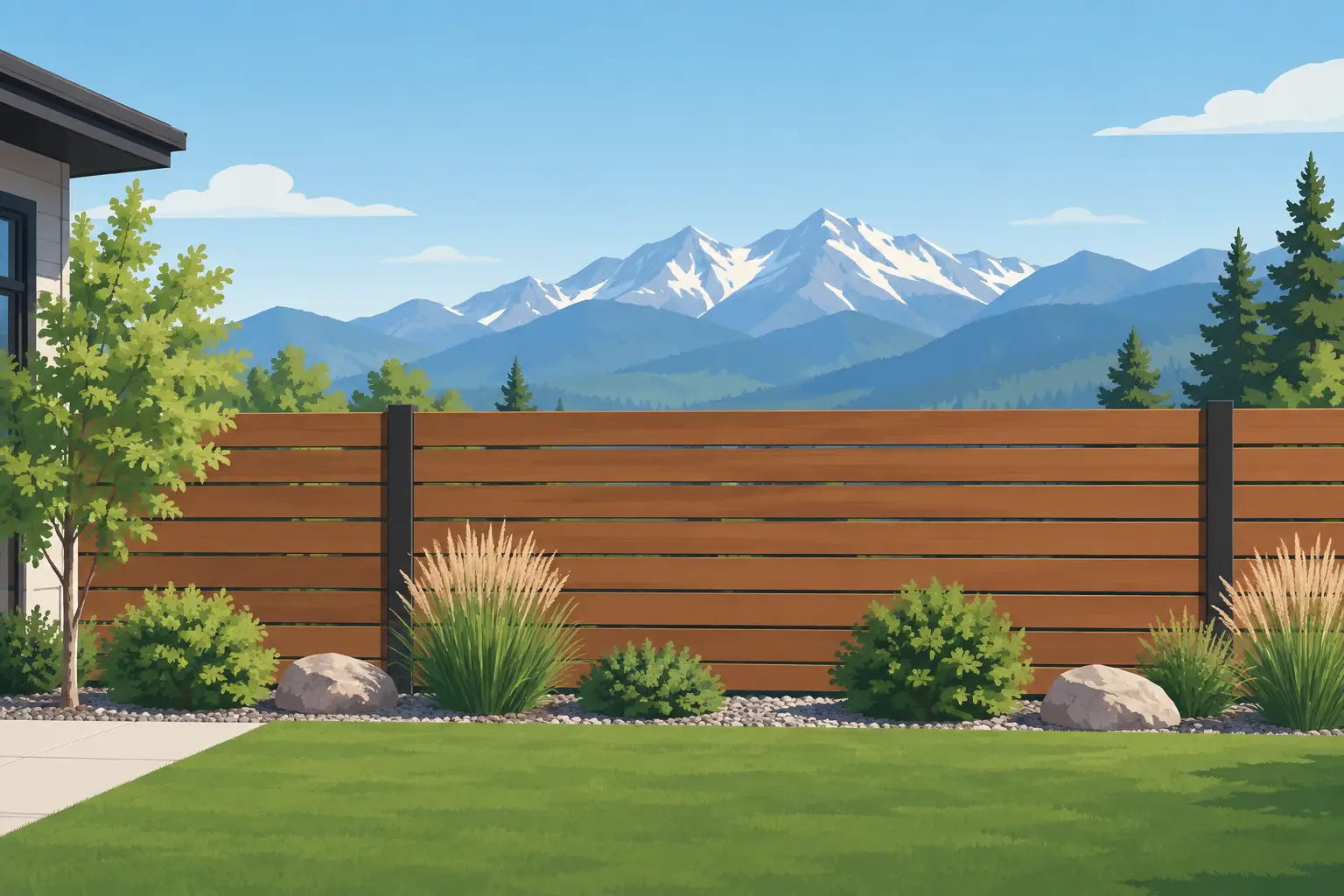
Horizontal Fence Design Ideas for Colorado Yards

A horizontal fence can make an ordinary backyard feel more intentional the moment it goes up. The long, clean lines suit modern homes, but the best horizontal fence design ideas do more than look good. They create privacy where it matters, keep kids and pets safely contained, handle Colorado weather, and fit the way your family actually uses the yard.
For a home in Northern Colorado or along the Front Range, the right design starts with the site. A wide-open lot in Windsor has different wind exposure than a shaded backyard in Fort Collins. A fence beside a busy street needs more visual screening than one separating friendly neighbors. Good design is not just choosing boards that run sideways. It is making practical choices before the first post is set.
Start With the Job Your Fence Needs to Do
Horizontal fencing is often chosen for its modern appearance, but appearance should not be the only deciding factor. Think first about where privacy is needed, where a gate will be used every day, and what needs to stay safely inside the yard.
A fully private fence works well around patios, hot tubs, play areas, and properties that sit close together. Closely spaced boards block most sightlines and create a calm backdrop for landscaping. If the goal is to define a boundary without closing in the space, a semi-private style with consistent gaps may be a better fit. It lets light and air move through while still giving the property a finished, custom look.
Height matters, too. A taller fence can improve privacy, but it may also change how wind moves through the yard and may be subject to local rules or neighborhood requirements. Before settling on a design, check property lines, utility locations, HOA guidelines where applicable, and local height limits. It is far easier to plan around those details than correct a finished fence later.
Horizontal Fence Design Ideas That Fit Real Yards
The simplest horizontal fence can still look sharp, especially when the wood, spacing, and framing are done carefully. These design directions give homeowners a starting point without treating every yard the same.
Full-privacy horizontal boards
This is the classic modern privacy fence: boards run horizontally with little or no gap between them. It provides a strong visual screen and a clean wall-like appearance without feeling as heavy as some vertical privacy styles.
Board width changes the look. Narrower boards create more lines and a more detailed finish, while wider boards feel calmer and more contemporary. Wider boards can also show more movement as wood expands and contracts through changing moisture and temperatures, so proper fastening and spacing are part of the build, not an afterthought.
Shadow-gap spacing
A small, even gap between boards gives a fence depth and a little visual relief. From farther away, it can still offer meaningful privacy, especially when the gap is narrow and landscaping fills in around the fence line.
This approach is a good choice for homeowners who want a lighter look. The trade-off is straightforward: larger gaps mean less privacy and more visibility into the yard. For a dog run, a play area, or a backyard facing a close neighbor, keep spacing tight enough that the fence still does its main job.
Mixed-width board patterns
Alternating wide and narrow boards adds character without relying on complicated decorative pieces. It works particularly well on long fence runs that might otherwise look flat. The pattern should be deliberate and repeat consistently, not feel random from panel to panel.
This option can pair well with contemporary homes, updated ranch houses, and properties where the fence is visible from a patio or main living space. It does require careful layout before installation so the pattern ends cleanly at posts, gates, and corners.
Framed horizontal panels
A framed design places horizontal boards inside a visible border of posts and rails. The frame gives the fence a more finished, architectural look and breaks a long property line into clear sections.
For homeowners who like black accents, dark metal posts or dark-stained trim can contrast nicely with warm-toned wood. Material selection matters here. Steel posts can offer a crisp, modern profile, while wood posts provide a more traditional feel. Either way, the structure behind the appearance needs to be built for the site and load it will carry.
Stepped sections for sloped ground
Colorado yards are not always level, and a horizontal fence should not pretend they are. On gradual slopes, boards can follow the grade in a controlled stair-step pattern. This keeps the horizontal lines straight while allowing the fence to move with the terrain.
The spaces beneath stepped panels need attention, especially where pets could squeeze through or where loose soil may wash out. In some yards, grading or a retaining solution may be needed before the fence is installed. A clean-looking fence starts with a stable site.
Choose Materials for Colorado Sun, Snow, and Wind
A horizontal design puts more visual attention on every board, so material quality and installation details show. Wood remains a popular choice because it brings warmth to a backyard and can be tailored to different styles. Cedar is often selected for its natural appearance and outdoor performance, while pressure-treated lumber can be a practical option for structural components and budget-conscious projects.
Wood is not maintenance-free. Colorado sun, dry air, temperature swings, snow, and spring moisture all affect it. A stain or protective finish can help preserve color and reduce weathering, but it needs to be maintained over time. Homeowners who prefer a silvery, weathered look can let wood age naturally, knowing that uneven sun exposure may produce variation.
Composite or vinyl may appeal to owners looking for a low-maintenance surface, though not every product delivers the same appearance or rigidity in a long horizontal span. Metal can bring a modern edge, but it usually offers less privacy unless combined with another material. The best choice depends on your budget, desired upkeep, exposure, and the style of the home.
The Structure Matters More Than the Trend
Horizontal fences put different forces on posts and rails than standard vertical-board fencing. Long boards can expand, contract, and catch wind across a broad surface. That is why post depth, concrete work, rail placement, fasteners, and board spacing deserve as much attention as the finished face of the fence.
In exposed areas around Greeley, Eaton, or the plains east of Denver, wind can be a major design factor. A solid privacy fence catches more wind than an open design. That does not mean a private horizontal fence is a bad choice. It means the posts and layout must be sized and installed with the conditions in mind.
Post placement also affects the appearance. Visible posts can create a strong modern rhythm. Hidden-post designs can look sleek, but they demand precise construction and may cost more because the framing has to work harder behind the boards. Ask what is supporting the fence, not just what the front will look like on installation day.
Do Not Treat the Gate as an Afterthought
A gate is the moving part of the fence, which makes it one of the first places poor planning shows up. A beautiful horizontal pattern can look awkward if it does not continue thoughtfully across the gate. More importantly, a gate must open, latch, and stay square through regular use.
Plan for the width you need before construction begins. A walk gate may be enough for daily access, while a wider gate is useful for lawn equipment, trash bins, trailers, or future projects. For homes with children and pets, reliable self-closing hardware or secure latch placement may be worth considering based on how the gate will be used.
Heavy horizontal boards add weight, so a gate often needs stronger framing than the nearby fence panels. This is not the place to cut corners. A sagging gate quickly turns a good-looking new fence into a daily frustration.
Use Landscaping to Make the Fence Feel Finished
The fence is a backdrop, not the entire yard. Shrubs, ornamental grasses, climbing plants, gravel borders, and simple planting beds can soften a long horizontal run and make the yard feel more settled. Keep plantings far enough from the fence to allow for drainage, cleaning, staining, and future repairs.
If privacy is the priority, layered landscaping can help where a fence alone cannot solve every sightline. A row of evergreens may add screening over time, while lower plants keep the fence from feeling overly tall at ground level. Just remember that plants grow, irrigation needs maintenance, and roots should not be allowed to crowd posts.
A well-built horizontal fence should feel like it belongs to the home, not like it was dropped into the yard. Bring a few photos, note where your family gathers outside, and be honest about your privacy and maintenance priorities. With a practical plan and careful installation, the result is a safer, more comfortable yard that looks good from every angle.
Comments