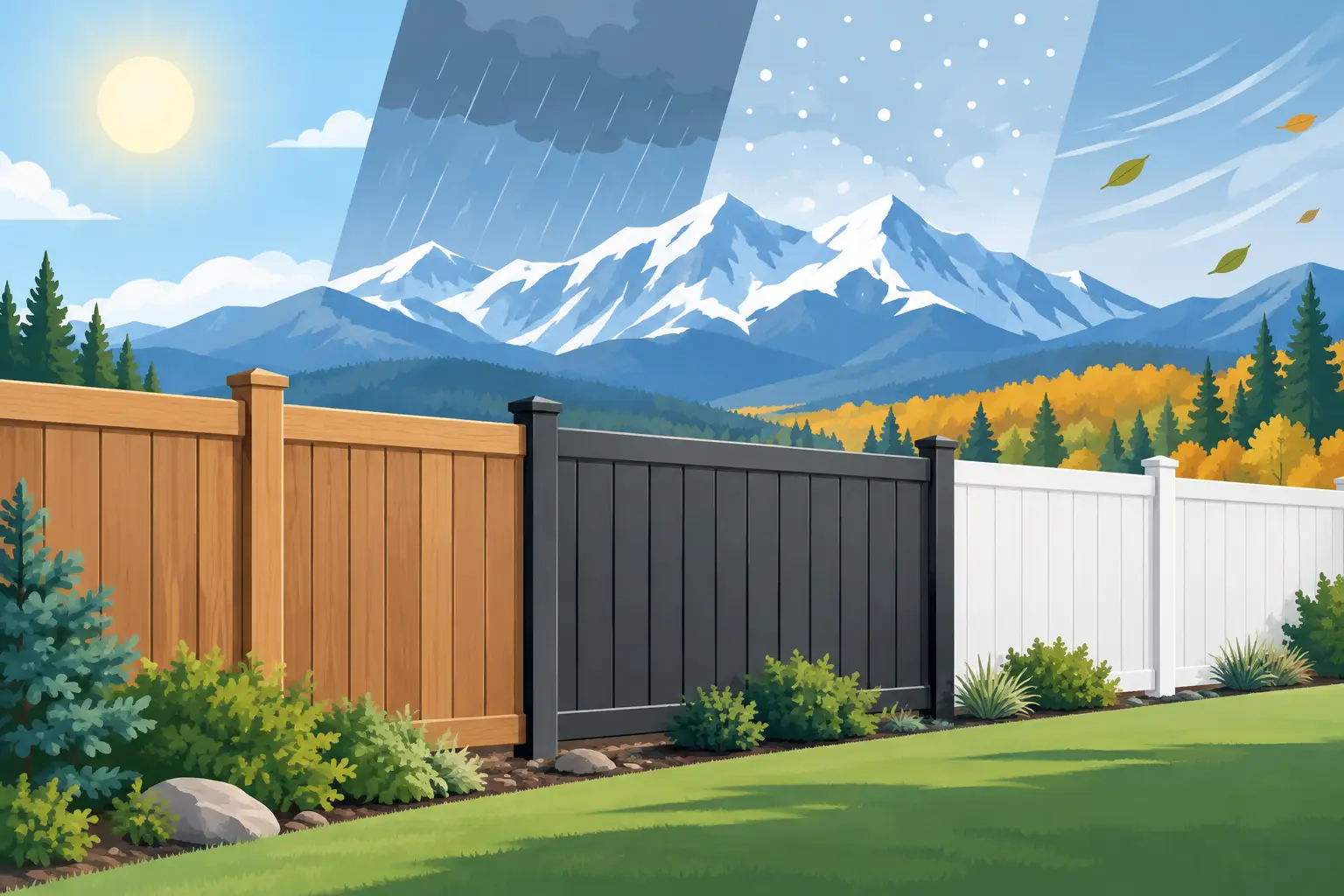
Best Fence for Colorado Weather That Lasts

Colorado can put a fence through more in one year than some regions see in five. Hot summer sun, heavy snow, hail, dry air, strong wind, freeze-thaw cycles, and shifting soil all work on posts, panels, fasteners, and gates. The best fence for Colorado weather is not one single material for every property. It is the fence that matches your yard, elevation, wind exposure, privacy needs, and willingness to maintain it.
For a family with dogs and young kids, a fence needs to do more than look good from the street. It needs to keep the backyard secure when the wind picks up, the ground freezes, and daily life gets busy. A good installation matters just as much as the material you choose.
What Colorado Weather Does to a Fence
Colorado's dry climate is easier on some materials than humid climates, but the weather swings create their own problems. Wood can expand and contract with moisture and temperature changes. Vinyl can become more brittle in deep cold. Steel can rust where its protective coating is damaged. Posts can move when soil freezes, thaws, or becomes saturated after a hard storm.
Sun exposure is another major factor. At Colorado's elevation, ultraviolet rays are intense. South- and west-facing fence lines take the hardest hit, especially if they have little shade. Materials that look great on day one may fade, dry out, or show surface wear faster on those sides of the property.
Wind is often the deciding factor people overlook. A tall solid privacy fence catches wind like a sail. On an open lot, near a greenbelt, or in a foothill community, the post depth, spacing, rails, and fastening method need to be built for that pressure. Choosing a durable material will not make up for shallow posts or weak framing.
The Best Fence for Colorado Weather Depends on Your Goal
A fence should fit the way you use your property. Privacy, pet containment, security, appearance, and cost all pull the decision in different directions. Here is how the most common options perform in Colorado conditions.
Wood privacy fencing: the most flexible choice
Wood remains one of the best choices for Colorado homeowners who want real privacy, a warm natural look, and the ability to customize the design. Cedar is especially popular because it handles moisture better than many other wood species and naturally resists decay. Treated pine can also be a practical, budget-conscious option when it is properly installed and maintained.
The trade-off is maintenance. Colorado sun can dry wood quickly, leading to fading, checking, and occasional warping. A quality stain or sealant helps protect the boards and keeps the fence looking cared for. Plan to inspect a wood fence each spring for loose pickets, popped fasteners, damaged boards, and areas where sprinklers repeatedly soak the wood.
For exposed yards, the construction details matter. Posts should be set deep enough for local soil conditions, and rails should be fastened securely to prevent sections from loosening over time. A well-built wood fence can serve a family for many years, but it does ask for regular attention.
Vinyl fencing: low maintenance with limits
Vinyl is a strong option for homeowners who want a clean, consistent appearance without painting, staining, or dealing with splinters. It does not rot, and it is not bothered by dry air the way wood can be. It is often a good fit for neighborhoods where a bright, uniform privacy fence or picket fence suits the home.
The main consideration is cold-weather impact. Quality vinyl is designed to handle changing temperatures, but lower-grade material may become less forgiving during a hard freeze. A direct hit from a fallen branch, snow equipment, or an energetic dog can crack a brittle panel. Vinyl also needs enough room for normal expansion and contraction, so installation should never be rushed.
Choose vinyl when low upkeep is a priority and your yard does not face frequent heavy impacts. It is particularly practical for homeowners who want more weekend time with their family and less time maintaining the fence.
Ornamental metal: long-term strength and curb appeal
Ornamental metal fencing is one of the most durable options for Colorado weather. It stands up well to sun, snow, and wind, and it gives a property a clean, secure look without closing off the view. It works well around front yards, pools, gardens, driveways, and homes with mountain or open-space views worth preserving.
Because ornamental metal is not a solid barrier, wind passes through it instead of pushing hard against the fence. That is a real advantage in exposed locations. It is also a good choice for containing pets when privacy is not the main concern.
The limitation is simple: metal fencing does not provide much privacy. It can also cost more upfront than basic wood or chain link. Look for quality coated materials and inspect the finish periodically, especially near scratches, cuts, or gate hardware where rust can begin.
Chain-link fencing: practical and dependable
Chain-link fencing has earned its place on Colorado properties for a reason. It is affordable, strong, and effective for securing dogs, children, side yards, and larger areas. Galvanized chain link handles the weather well, while vinyl-coated options offer a darker, more finished appearance that can blend into a yard.
Like ornamental metal, chain link lets wind move through it. That makes it a sensible choice for open properties and areas that see regular gusts. It is also a practical solution for rural lots, utility areas, and property managers who need a durable boundary without the cost of a full privacy fence.
Its downside is visibility. Chain link does not create a private backyard on its own. Some homeowners add privacy slats or plant screening, but solid slats can increase wind load, so that decision should be made with the fence structure in mind.
Split rail and agricultural fencing: right for larger properties
For rural properties, acreage, and homes with a more open landscape, split rail and agricultural fencing can be the right answer. Split rail offers a classic Colorado look and defines a boundary without blocking views. Adding welded wire can make it more useful for dogs and smaller animals.
Agricultural fencing is built around function. The best style depends on whether you are containing livestock, marking boundaries, protecting a garden, or keeping pets within a large yard. Terrain matters here. Slopes, rocky ground, and long fence runs need thoughtful planning before posts go into the ground.
Installation Is What Makes a Fence Hold Up
Even the right material can fail early if the installation is not built for the site. Colorado soil can range from loose and sandy to hard clay, rocky ground, and expansive soil. A contractor should consider soil conditions, grade changes, drainage, and wind exposure before deciding how to set posts and lay out the fence.
Concrete-set posts are common, but the depth and diameter of each hole should fit the fence height and local conditions. Taller privacy fencing needs stronger support than a short picket fence. Gates deserve extra attention because they carry repeated weight and movement. A sagging gate is often a sign that its posts, hinges, or frame were not built to handle the job.
Drainage also protects the investment. Avoid trapping water at the base of wood posts, and keep sprinklers from blasting the same fence section day after day. If snow piles up along a fence after shoveling or plowing, clear it when practical so prolonged moisture does not sit against the material.
How to Choose for Your Yard
Start with the one job your fence must do well. If you need backyard privacy and a safe place for children and pets, a properly built cedar or treated-wood privacy fence is often the best fit. If you want low maintenance and a polished neighborhood look, vinyl may make sense. If security, durability, and an open view matter most, ornamental metal is hard to beat. For reliable containment at a practical price, chain link remains a dependable choice.
Then look honestly at your site. A sheltered suburban yard gives you more flexibility than a windy corner lot or a foothill property. A fence that works beautifully in one neighborhood may need heavier posts, different spacing, or a different design a few miles away.
At AR Fencing, we have seen that Colorado fences last longer when the plan respects the property before construction begins. The goal is not to sell every homeowner the same fence. It is to build one that protects the yard, the people in it, and the time you want to spend enjoying home instead of fixing it.
Before choosing a style, walk your property after a storm or on a windy afternoon. That simple look at how water, sun, and wind move through your yard can point you toward a fence that will keep doing its job season after season.
Comments