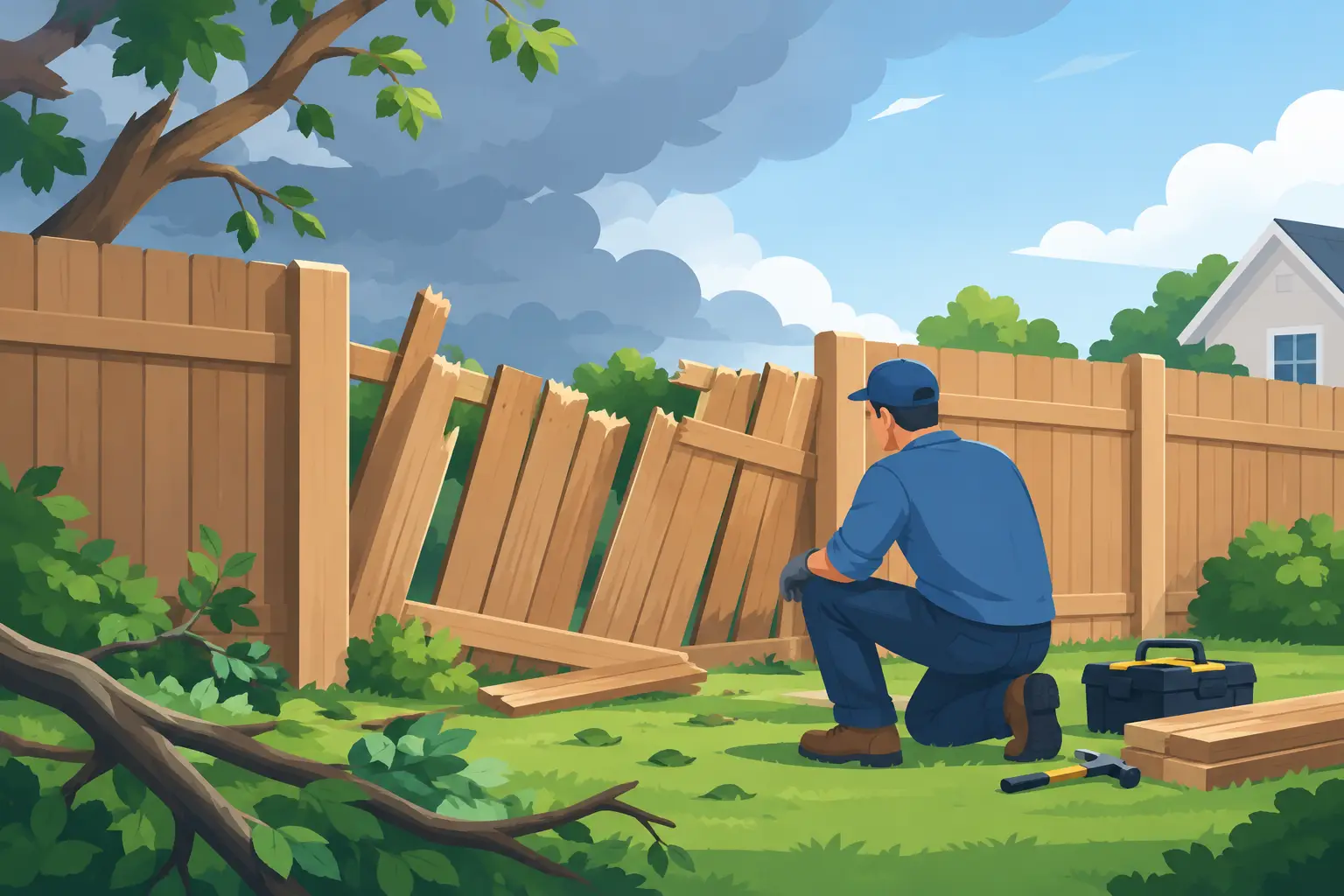
Fence Repair After Storm Damage: First Steps

A hard Colorado windstorm can turn a secure backyard into a mess in one afternoon. One section may be leaning, a gate may no longer latch, or panels may be scattered across the yard. Fence repair after storm damage is about more than making the property look better again. It is about getting children, pets, and the people next door safely separated while you decide what can be saved.
The right next step depends on what failed and why. A few loose boards are usually a repair. Posts that have shifted, snapped, or pulled loose from the ground can point to a larger structural problem. Taking a careful look before moving materials or calling for a quick patch can save money and prevent a second failure when the next storm rolls through.
Start With Safety, Not Cleanup
Before picking up fallen boards, make sure the area is safe to enter. High winds can leave nails, screws, broken rails, sharp metal edges, and unstable sections that may fall without warning. Keep kids and pets indoors or on a leash until the yard is secured.
If a fence is resting against a utility line, service equipment, or a damaged tree limb, do not try to move it yourself. Contact the utility provider or an appropriate tree professional first. A fence can be replaced. An electrical or overhead hazard needs immediate professional attention.
For an open yard that normally contains a dog, a temporary barrier may be necessary. Portable panels, temporary construction fencing, or a secured run can help for a short period. Avoid tying loose fence panels together with wire and hoping they will hold. A panel that looks stable in calm weather can become a hazard in the next gust.
Document the Damage Before Removing It
Once the area is safe, take clear photos from several angles. Capture the damaged sections, the posts, gates, surrounding landscaping, and any tree or debris impact. If a neighbor shares the fence line, take photos that show where the damage begins and ends without making assumptions about responsibility.
Documentation can help with insurance questions, conversations with a neighbor, and a contractor estimate. It also gives you a useful before-and-after record of the work. If you are filing a claim, check with your carrier before discarding major damaged pieces, especially if the fence was hit by a fallen tree or another covered event.
Storm damage does not always qualify for coverage, and deductibles can make a smaller repair claim impractical. That is why it helps to get a clear repair estimate first. You can compare the cost with your deductible and make a decision based on real numbers rather than the first stressful day after a storm.
How to Tell Whether Your Fence Needs Repair or Replacement
A fence is a system. Boards, rails, posts, fasteners, gates, and footings all work together. Replacing only the visible broken pieces makes sense when the supporting structure is still solid. When the structure has failed, cosmetic fixes can leave the fence weak and uneven.
Damage that is often repairable
A targeted repair is usually a good option when damage is limited to one small area and the posts remain plumb, firm, and sound. This can include cracked pickets, a broken rail, loose hardware, a bent chain-link top rail, or a gate that needs adjustment after a storm.
Wood fences commonly lose individual pickets in high wind, particularly where aging fasteners have begun to back out. Replacing those boards and securing the rails can restore privacy without rebuilding the entire run. Vinyl panels may also be repairable if a single panel or rail is damaged and matching materials are available.
Signs that replacement may be the wiser choice
Replacement deserves serious consideration when multiple posts are leaning, rotted, split, or loose in the soil. It may also be the better value when rails are broken across several sections, a long stretch of fencing has collapsed, or the existing fence was already near the end of its useful life.
Look closely at the line of posts after wind damage. If they lean in the same direction, the storm may have overloaded the whole run. Straightening panels while leaving weakened posts in place can create a fence that looks repaired but does not have the strength to stand up to future weather.
For older wood fencing, a storm sometimes exposes problems that have been developing slowly: decay at ground level, undersized posts, shallow footings, or rails weakened by moisture. In that situation, investing in repeated spot repairs may cost more over time than replacing the failed section with a properly built fence.
Colorado Conditions Change the Repair Plan
Along the Front Range, fences deal with strong wind, dry heat, freeze-thaw cycles, hail, heavy wet snow, and soils that vary from one property to the next. A repair that works on a sheltered city lot may not be enough for an exposed property near open fields or foothills.
Post depth and footing condition matter more than most homeowners realize. When soil becomes saturated, freezes, or shifts, a post can lose the support it needs. A contractor should inspect whether the post itself is sound, whether the concrete footing is intact, and whether drainage or grading is adding stress around the fence line.
Wind also finds weak points. A solid privacy fence catches more wind than an open split rail or chain-link fence. That does not mean privacy fencing is a poor choice. It means post spacing, rail layout, fasteners, and the condition of gates all need to match the job. If one side of a yard takes the full force of prevailing winds, rebuilding that section with stronger construction can be a smart long-term adjustment.
Do Not Forget the Gate
After a storm, homeowners often focus on fallen panels and overlook the gate. Yet a gate that does not close securely can make the yard unusable for pets and children even if the rest of the fence is standing.
Check whether the gate posts are vertical, hinges are tight, and the latch aligns without lifting or forcing the gate. A sagging gate may need a simple hinge adjustment, but it can also signal that a gate post has shifted. Repairing the gate without correcting the post usually leads to the same problem returning.
If the storm damaged a double gate, make sure both leaves close and latch as intended. Large gates place extra stress on posts, especially in wind. This is one area where a temporary workaround can be frustrating and unsafe, so it is worth getting the structure evaluated properly.
Choosing a Contractor for Storm Fence Repairs
Storms bring a rush of repair offers. A dependable fencing contractor should be willing to look beyond the broken boards and explain what caused the failure. Ask whether the work involves resetting or replacing posts, how damaged materials will be removed, what matching options are available, and whether the estimate separates repair work from a full replacement option.
Clear communication matters just as much after a storm as the construction itself. You should know what work is planned, what materials are being used, how long the yard will be open, and what conditions could change the price. For a shared fence, it also helps to have a written scope that makes the repair area easy to understand.
AR Fencing approaches storm repairs with the same practical goal homeowners have: get the yard secure again, clean up the damage, and build the repaired section to hold up through the weather ahead. A clean job site and a straightforward explanation go a long way when a storm has already disrupted your home.
A Better Repair Can Prevent the Next Failure
The most useful storm repair is not always an exact rebuild of what was there before. If a section failed because posts were compromised, the repair should address the posts. If a gate repeatedly catches wind, stronger hardware or a revised gate design may be worth considering. If a tree is pressing against the fence line, trimming or removing that risk can protect the new work.
Matching an existing fence is often the priority, especially in a visible backyard or neighborhood setting. Still, there are trade-offs. Exact materials may be weathered, discontinued, or difficult to source. A good contractor can explain whether a close match, a rebuilt section, or a planned replacement of a longer run will give you the best result for your budget.
A damaged fence can make home feel less settled fast. Start with safety, document what happened, and get an honest assessment of the structure before committing to a quick fix. The goal is simple: a secure yard where your family and pets can get back outside with confidence.
Comments